1. Product Overview
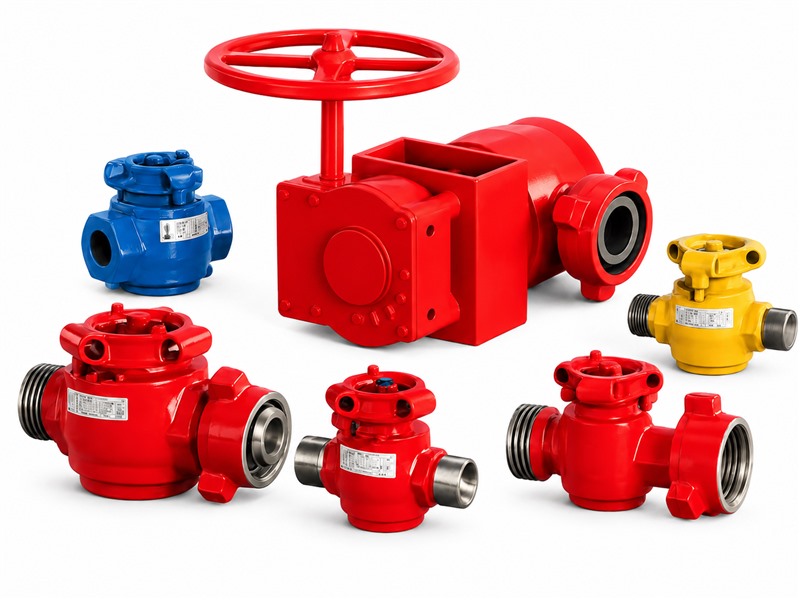
Plug valves are flow-control components used in cementing, fracturing, acidizing, and high-pressure manifold systems. They are primarily used for on/off isolation and flow-path switching in high-pressure oilfield flowlines and manifolds. They shall not be used for throttling unless the specific design is qualified for that service.
Main components include the pressure-containing body, quarter-turn plug, replaceable seal segments, bonnet and manual, pneumatic or hydraulic actuator, depending on model.
The low-torque plug-valve body is forged from alloy steel and heat-treated to achieve the specified mechanical properties for rated pressure-containing service. Technical performance follows relevant API Spec 6A requirements.
End connections include union ends, LP female threads, TBG male threads, and flanged connections. Base-mounted configurations are available for specific manifold layouts and installation requirements.
Common sizes include 1 in, 2 in, 3 in, and 4 in. Cold working pressure ratings include 6,000 psi, 10,000 psi, 15,000 psi, and 20,000 psi. Standard-, low-temperature- and sour-service configurations are available with model-specific repair kits. For sour service, wetted metallic materials must be selected for the stated environment in accordance with NACE MR0175/ISO 15156.
2. Design Features
The handwheel rotates the plug through 90 degrees to provide full-open or full-closed line isolation. Seal segments between the valve body and plug, combined with precision machining and lapping, maintain reliable sealing under high-pressure service.
The pressure boundary is designed for the nameplate CWP. Replaceable NBR seal segments, where supplied, must be compatible with the ordered fluid, temperature and service environment.
Union ends, LP threads, TBG threads and other connection forms must match the approved mating profile and adjacent manifold layout; catalogue size or Fig alone does not establish cross-manufacturer interchangeability.
Model-specific servicing may be performed in line where the approved maintenance procedure permits it. Isolation, depressurization, tools and replacement parts must follow that procedure.
The precision-machined plug and specified surface treatment support sealing and wear resistance; coating suitability remains dependent on the ordered fluid and service environment.
The plug cap has clear open/close position marks, and the detent spring assists positioning so operators can quickly identify valve status.
3. Plug Valve Main Technical Parameters
1. Main Parameters of Union-End Plug Valves
Cold Working Pressure: 6,000 psi to 20,000 psi
Nominal Bore: 1″ to 3″
Standard-Configuration Operating Range*: -29 °C to 121 °C
Low-Temperature Configuration*: minimum temperature down to -46 °C only where supported by the ordered API temperature class and material/seal configuration
Service: standard, low-temperature or sour service, as documented
Product Specification: API Spec 6A; sour-service metallic-material selection: NACE MR0175/ISO 15156, where ordered
| Model | Nominal Bore | Cold Working Pressure | Overall Dimensions (mm) | Connection Type | Actuator | Service | ||
|---|---|---|---|---|---|---|---|---|
| L | A | H | ||||||
| 1" × 2" Fig 1502, 15,000 psi, F × M, Manual | 1″ | 15,000 psi | 268.2 | 61 | 185 | 2" Fig 1502 (F×M) | Manual | Standard |
| 1" × 2" Fig 1502, 15,000 psi, F × M, Pneumatic | 1″ | 15,000 psi | 268.2 | 61 | 185 | 2" Fig 1502 (F×M) | Pneumatic | Standard |
| 2" × 2" Fig 602, 6,000 psi, F × M, Manual | 2″ | 6,000 psi | 353 | 88 | 225.5 | Fig 602 (F×M) | Manual | Standard |
| 2" × 2" Fig 1002, 10,000 psi, F × M, Manual | 2″ | 10,000 psi | 353 | 88 | 225.5 | Fig 1002 (F×M) | Manual | Standard |
| 2" × 2" Fig 1502, 15,000 psi, F × M, Manual | 2″ | 15,000 psi | 353 | 88 | 225.5 | Fig 1502 (F×M) | Manual | Standard |
| 2" × 3" Fig 1502, 15,000 psi, F × M, Manual | 2″ | 15,000 psi | 374.5 | 88 | 225.5 | 3" Fig 1502 (F×M) | Manual | Standard |
| 2" × 2" Fig 1502, 15,000 psi, F × M, Pneumatic | 2″ | 15,000 psi | 353 | 88 | / | Fig 1502 (F×M) | Pneumatic | Standard |
| 2" × 2" Fig 1502, 15,000 psi, F × M, Hydraulic | 2″ | 15,000 psi | 353 | 100 | 409 | Fig 1502 (F×M) | Hydraulic | Standard |
| 2" × 2" Fig 2002, 20,000 psi, F × M, Manual | 2″ | 20,000 psi | 386 | 88 | 225 | Fig 2002 (F×M) | Manual | Standard |
| 3" × 3" Fig 602, 6,000 psi, F × M, Manual | 3″ | 6,000 psi | 432 | 103 | 254 | Fig 602 (F×M) | Manual | Standard |
| 3" × 3" Fig 1002, 10,000 psi, F × M, Manual | 3″ | 10,000 psi | 432 | 103 | 254 | Fig 1002 (F×M) | Manual | Standard |
| 3" × 3" Fig 1502, 15,000 psi, F × M, Manual | 3″ | 15,000 psi | 432 | 103 | 254 | Fig 1502 (F×M) | Manual | Standard |
| 3" × 3" Fig 1502, 15,000 psi, F × M, Gear-Operated | 3″ | 15,000 psi | 432 | 103 | 630 | Fig 1502 (F×M) | Gearbox | Standard |
| 3" × 3" Fig 1502, 15,000 psi, F × M, Hydraulic | 3″ | 15,000 psi | 432 | 103 | / | Fig 1502 (F×M) | Hydraulic | Standard |
| 3" × 3" Fig 2002, 20,000 psi, F × M, Manual | 3″ | 20,000 psi | 562 | 159 | 489 | Fig 2002 (F×M) | Manual | Standard |
| 3" × 3" Fig 2002, 20,000 psi, F × M, Gear-Operated | 3″ | 20,000 psi | 562 | 159 | / | Fig 2002 (F×M) | Gearbox | Standard |
| 3" × 3" Fig 2002, 20,000 psi, F × M, Hydraulic | 3″ | 20,000 psi | 562 | 159 | / | Fig 2002 (F×M) | Hydraulic | Standard |
| 1" × 2" Fig 1502, 10,000 psi, F × M, Manual, NACE | 1″ | 10,000 psi | 269 | 61 | 185 | 2" Fig 1502 (F×M) | Manual | H2S |
| 2" × 2" Fig 602, 6,000 psi, F × M, Manual, NACE | 2″ | 6,000 psi | 353 | 88 | 225.5 | Fig 602 (F×M) | Manual | H2S |
| 2" × 2" Fig 1502, 10,000 psi, F × M, Manual, NACE | 2″ | 10,000 psi | 353 | 88 | 225.5 | Fig 1502 (F×M) | Manual | H2S |
| 3" × 3" Fig 602, 6,000 psi, F × M, Manual, NACE | 3″ | 6,000 psi | 432 | 103 | 235 | Fig 602 (F×M) | Manual | H2S |
| 3" × 3" Fig 1502, 10,000 psi, F × M, Manual, NACE | 3″ | 10,000 psi | 432 | 103 | 235 | Fig 1502 (F×M) | Manual | H2S |
| 3" × 3" Fig 1502, 10,000 psi, F × M, Gear-Operated, NACE | 3″ | 10,000 psi | 432 | 103 | 630 | Fig 1502 (F×M) | Gearbox | H2S |
| 3" × 3" Fig 2202, 15,000 psi, F × M, Manual, NACE | 3″ | 15,000 psi | 562 | 159 | 489 | Fig 2202 (F×M) | Manual | H2S |
| 1" × 2" Fig 1502, 10,000 psi, F × M, Manual, Low-Temperature | 1″ | 10,000 psi | 269 | 178 | 185 | 2" Fig 1502 (F×M) | Manual | Low-Temperature |
| 2" × 2" Fig 602, 6,000 psi, F × M, Manual, Low-Temperature | 2″ | 6,000 psi | 353 | 201 | 225.5 | Fig 602 (F×M) | Manual | Low-Temperature |
| 2" × 2" Fig 1502, 10,000 psi, F × M, Manual, Low-Temperature | 2″ | 10,000 psi | 353 | 201 | 225.5 | Fig 1502 (F×M) | Manual | Low-Temperature |
| 3" × 3" Fig 602, 6,000 psi, F × M, Manual, Low-Temperature | 3″ | 6,000 psi | 432 | 103 | 235 | Fig 602 (F×M) | Manual | Low-Temperature |
| 3" × 3" Fig 1502, 10,000 psi, F × M, Manual, Low-Temperature | 3″ | 10,000 psi | 432 | 103 | 254 | Fig 1502 (F×M) | Manual | Low-Temperature |
2. Main Parameters of Threaded Plug Valves
Cold Working Pressure: 6,000 psi to 15,000 psi
Nominal Bore: 1″ to 3″
Rated Operating-Temperature Range*: -29 °C to 121 °C
Product Specification: API Spec 6A, as documented for the ordered model
Service: standard
| Model | Nominal Bore | Cold Working Pressure | Overall Dimensions (mm) | Connection Type | Actuator | Service | ||
|---|---|---|---|---|---|---|---|---|
| L | A | H | ||||||
| 1" × 2", 6,000 psi, 2" LP, Manual | 1″ | 6,000 psi | 232 | 45 | 185 | 2″ LP male thread | Manual | Standard |
| 1" × 2", 15,000 psi, 2" LP, Manual | 1″ | 15,000 psi | 232 | 61 | 185 | 2″ LP male thread | Manual | Standard |
| 1" × 2", 15,000 psi, 2" TBG, Manual | 1″ | 15,000 psi | 232 | 61 | 185 | 2″ TBG male thread | Manual | Standard |
| 2" × 2", 6,000 psi, 2" LP, Manual | 2″ | 6,000 psi | 218 | 76.5 | 198.3 | 2″ LP female thread | Manual | Standard |
| 2" × 2", 10,000 psi, 2" LP, Manual | 2″ | 10,000 psi | 218 | 76.5 | 198.3 | 2″ LP female thread | Manual | Standard |
| 2" × 2", 10,000 psi, 2" TBG, Manual | 2″ | 10,000 psi | 228 | 76.5 | 198.3 | 2″ TBG female thread | Manual | Standard |
| 3" × 3", 10,000 psi, 3" LP, Manual | 3″ | 10,000 psi | 316 | 110 | 314.5 | 3″ LP Female Thread | Manual | Standard |
3. Flanged Plug Valves and Base-Mounted Plug Valves
4. Example: 2" × 2" Fig 1502, 15,000 psi / 105 MPa, F × M Plug Valve Exploded View and Parts List
| No. | Name | Quantity | No. | Name | Quantity | No. | Name | Quantity |
|---|---|---|---|---|---|---|---|---|
| 1 | Valve body | 1 | 8 | Locating pin | 2 | 15 | Bonnet O-ring | 1 |
| 2 | Sealing washer | 1 | 9 | Plug O-ring | 2 | 16 | Bonnet support ring | 1 |
| 3 | Spring retaining ring | 1 | 10 | Plug support ring | 2 | 17 | Spring dowel pin | 1 |
| 4 | Wing nut | 1 | 11 | Side seal segment | 2 | 18 | Valve body cover | 1 |
| 5 | Retaining ring | 3 | 12 | Segment seal ring | 2 | 19 | Plug cap | 1 |
| 6 | Detent spring | 1 | 13 | Seal segment | 2 | 20 | Lock nut | 1 |
| 7 | Stop pin | 2 | 14 | Plug | 1 | 21 | Grease fitting | 1 |
5. Model-Specific Plug Valve Repair Kit Parts List (verify every part against the approved drawing)
| No. | Part Name | 2″×2″ | 3″×3″ | No. | Part Name | 2″×2″ | 3″×3″ | No. | Part Name | 2″×2″ | 3″×3″ |
|---|---|---|---|---|---|---|---|---|---|---|---|
| 1 | Grease fitting | 2 | 1 | 4 | Plug | 1 | 1 | 7 | Segment seal ring | 2 | 4 |
| 2 | Plug O-ring | 2 | 2 | 5 | Bonnet O-ring | 1 | 1 | 8 | Seal segment | 2 | 2 |
| 3 | Plug support ring | 2 | 2 | 6 | Bonnet support ring | 1 | 1 | 9 | Side seal segment | 2 | 2 |
4. Operation and Maintenance Notes
Before use, check the nameplate pressure rating, bore size, connection type, and temperature range to ensure they match drilling, cementing, fracturing, or production service conditions.
Each valve is pressure-tested and examined as required by the ordered product specification. After pressure-boundary disassembly, repair or seal replacement, repeat the applicable body/seat tests using the approved pressures, hold times and acceptance criteria; remove trapped air before hydrostatic testing.
Install and tighten hammer unions according to proper procedures. Avoid excessive hammering that may deform nuts or damage sealing faces. Operators should wear protective equipment.
Do not dismantle, tighten or repair the valve while the system is under pressure. Never operate beyond the nameplate CWP or the documented temperature limits of the ordered material, seal and lubricant configuration.
During service, regularly inspect the valve body, bonnet, plug, seal segments, and O-rings. If leakage, wear, corrosion, deformation, or difficult operation is found, clean, repair, or replace wearing parts promptly.
During transportation and storage, avoid impact, rain exposure, and corrosive media. Keep valves in a dry, ventilated area. Certificates, packing lists, and operating instructions are supplied with each order; special specifications can be quoted for field service conditions.
* Actual temperature capability depends on the documented material, elastomer, lubricant and ordered service configuration.