1. Product Overview
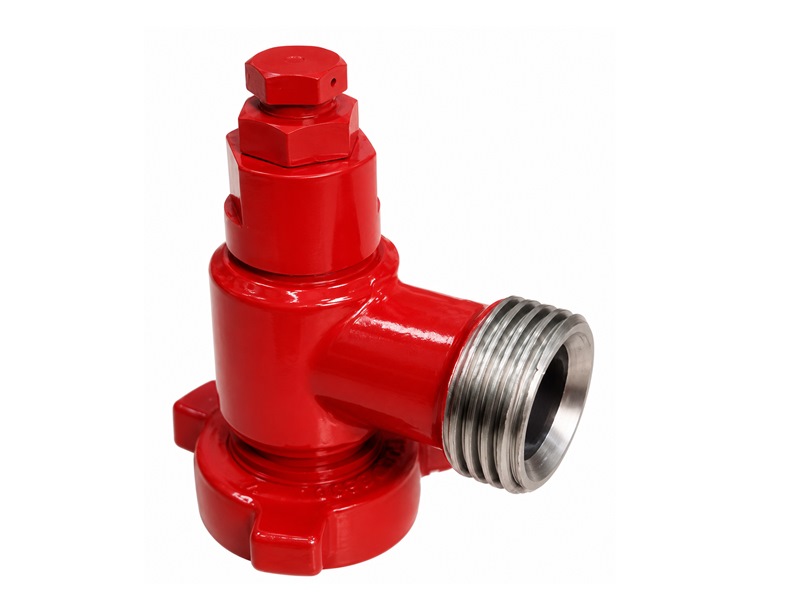
The pressure relief valve is direct-acting and self-resetting. Its release mechanism uses a spring-loaded steel ball and seat. When system pressure reaches the verified set pressure, the valve opens to relieve pressure; after pressure falls to the documented reseating pressure, the closing assembly reseats under spring force.
The valve can be installed on high-pressure flow-control lines, reciprocating plunger pumps, pressure-pumping manifold skids, and cementing or fracturing equipment to limit maximum system pressure and protect equipment and personnel.
The top adjustment mechanism sets the valve opening pressure for the specified service. The set-pressure range is model-specific and must be confirmed against the line MAWP, required relieving capacity and approved test data.
The valve body is forged from alloy steel and heat-treated to the specified mechanical-property and impact-toughness requirements for rated pressure-containing service.
2. Design Features
The spring-loaded mechanism opens to relieve an overpressure and reseats after pressure falls. Following a relief event, the system shall be isolated and inspected in accordance with the operating procedure.
The spring, stem, seat and seal arrangement is model-specific. Inlet losses, discharge routing, back pressure and required relieving capacity must be considered when integrating the valve into a high-pressure pump or flowline system.
The adjustment mechanism allows the set pressure to be configured within the documented range for the selected model; adjustment and verification shall be performed by authorized personnel.
Hammer-union ends support field installation and replacement. The Fig designation, size, pressure rating and mating profile shall be verified against the adjacent flowline components.
Fig 1502- and Fig 2002-pattern union ends are available. These Fig designations are not API 6A flange specifications; mating profile and interchangeability must be verified by approved drawing and manufacturer.
Inspection, calibration, maintenance interval and replacement criteria are defined by the model-specific procedure and the protected system's overpressure-protection plan.
3. Pressure Relief Valve Main Technical Parameters
Cold Working Pressure: 15,000 psi or 20,000 psi (listed models)
Nominal Bore: 2 in
Rated Operating-Temperature Range*: -29 °C to 121 °C
| Model | Cold Working Pressure | L | A | H | End Connection Type | Connection Type |
|---|---|---|---|---|---|---|
| 2" Fig 1502, 15,000 psi, F × M | 15,000 psi | 366 | 154 | 154 | Fig 1502 | F × M |
| 2" Fig 2002, 20,000 psi, F × M | 20,000 psi | 376 | 166.5 | 154 | Fig 2002 | F × M |
4. Pressure Relief Valve Repair Kit
The repair kit supports seal maintenance and wear-part replacement for pressure relief valves. Typical parts include the spring-seat O-ring, stem, stem seal, stem O-ring, steel ball, seat, and seat O-ring.
* Actual temperature capability depends on the documented material, elastomer, lubricant and ordered service configuration.